

Frequently Asked Questions
Information about the operations and products of Howland's Honey!

How should honey be stored? It stays freshest stored in a cool, dry place. However, it can be stored at any temperature but it will change the consistency. Colder temperatures create a more firm product whereas warm places will create a softer product. Liquid honey will remain so up to 6 months.

How long will my honey last? Honey has an unlimited shelf life due to the sugar content and low PH. However, over time honey will undergo some natural changes, such as darkening, losing aroma and flavor, and it will crystallize. Even with these changes it is safe to consume.

What do the bees do for winter? The Honey Bee is not originally from Canada so it needs some help over winter. Our honey producing hives spend the winter outdoors, wrapped in an insulated covering to keep moisture out and heat in.

How should I soften my honey? If you don't need it right away, try placing the honey in a warm area in your home. If you need it right away, submerge the tub, with the lid on, in warm water. Be sure that the water does not reach the lid as you don't want it leaking in.

Your honey says it is unpasteurized, what does that mean? It means that our honey has not went through high heat while processing. This allows the natural nutritional properties to remain after it is processed.

How do the bees make honey? Bees make honey through a process that begins when they collect nectar from flowers. They store the nectar in their honey stomachs, where enzymes begin breaking it down into simpler sugars. Once back at the hive, bees regurgitate the nectar and pass it to other worker bees, who further digest it and then deposit it into hexagonal beeswax cells. To reduce the moisture content, bees fan the honey with their wings, facilitating evaporation.
Come take a look!
How to find us:
What we do with the bees over winter:
Who's in the Hive?
Queen

Her job is to populate the hive. She stays in the hive for most of her life, only leaving for a mating flight. She lives between two to five years. She is identifiable by her longer body shape and bigger size compared to the worker bee.
Drone
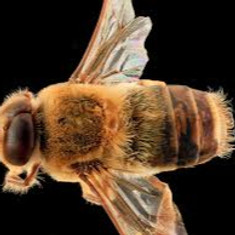
These are the male bees from the hive. Their only job is to mate with neighboring queens. They are often larger than the worker bees and don't have a stinger. They have a smaller population in the hive and will be kicked out nearing cooler months so that remaining bees all contribute.
Worker

Non-reproductive female in the hive. They have many duties to keep the hive functioning. Their stingers are one time use due to the barbed ends, and stinging will cause the bee to die.
Worker Jobs

Roles in the hive are dependent on the age of the bee. They start at the top of the list of jobs and move down as they get older.
Cleaner: clean cells, starting with the one they were born in.
Nurse: feed larvae
Architect & Undertaker: produce wax, carry food, build comb, and remove deceased bees
Guard: protect the hive entrance
Forager: bees fly from the hive and collect pollen, nectar, water, etc.